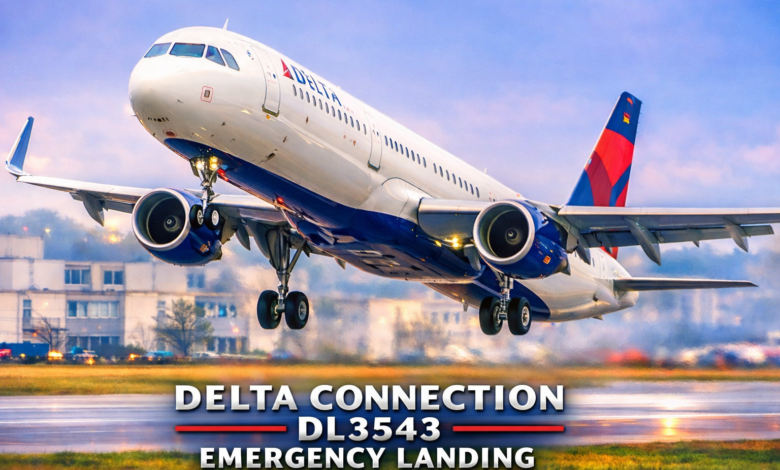
Air travel remains one of the safest ways to travel. Still, unexpected events can happen. One such event that recently drew attention is the Delta Connection DL3543 emergency landing. Travelers often search for details when incidents like this occur. People want to understand what happened, why it happened, and what it means for flight safety.
This article provides a clear and easy-to-read breakdown of the situation. It explains the possible causes, safety procedures, passenger reactions, and what airlines typically do during emergency landings.
What Happened During the Delta Connection DL3543 Emergency Landing?
The Delta Connection DL3543 emergency landing became a topic of interest after reports suggested that the flight needed to land unexpectedly. While emergency landings may sound alarming, they are actually part of standard aviation safety protocols.
Pilots train extensively for these situations. Aircraft systems also include multiple safety layers.
In most emergency landing scenarios:
- The crew detects a potential issue
- Pilots follow established safety checklists
- Air traffic control receives immediate updates
- The aircraft lands safely as a precaution
Emergency landings do not automatically mean danger. Many are preventive actions.
Understanding Emergency Landings in Aviation
An emergency landing occurs when a pilot decides to land earlier than planned due to a safety concern. These concerns can range from minor technical alerts to medical situations.
Common Reasons for Emergency Landings
Airlines perform emergency landings for many reasons:
- Mechanical or technical alerts
- Engine-related warnings
- Cabin pressure concerns
- Weather complications
- Medical emergencies
- Unusual instrument readings
In many cases, pilots act out of caution rather than necessity.
Possible Causes Behind the Delta Connection DL3543 Emergency Landing
Without official investigation results, we can only discuss general possibilities. Aviation incidents usually involve routine safety responses.
1. Technical System Alerts
Modern aircraft contain thousands of sensors. These sensors monitor:
- Engine performance
- Hydraulic systems
- Fuel systems
- Electrical components
Even a small irregular reading can trigger precautionary actions.
2. Engine Performance Monitoring
Aircraft engines rarely fail outright. Instead, crews may observe:
- Temperature variations
- Vibration differences
- Pressure fluctuations
Pilots often land early to inspect such findings.
3. Cabin Pressure Variations
Cabin pressure systems maintain comfort at high altitude. If pressure readings shift unexpectedly, crews respond immediately.
Standard procedures may include:
- Descending to a safer altitude
- Landing at the nearest suitable airport
4. Medical Situations
Medical emergencies are one of the most frequent causes of unscheduled landings.
Examples include:
- Chest pain
- Breathing difficulties
- Severe allergic reactions
In these cases, time matters more than schedule.
Why Emergency Landings Are Often Preventive
Many passengers assume emergency landings involve severe danger. In reality, aviation prioritizes prevention.
Pilots land early because:
- Safety comes first
- Inspections reduce risk
- Minor issues stay minor
- Passenger well-being matters most
A preventive landing reflects strong safety culture, not failure.
Passenger Experience During an Emergency Landing
Passengers often describe emergency landings as tense but controlled. Airline crews follow calm and clear communication practices.
What Passengers Typically Notice
During events like the Delta Connection DL3543 emergency landing, passengers may observe:
- Crew announcements
- Seatbelt reminders
- Cabin preparation steps
- Slight changes in flight path
Cabin crews receive special training for these moments.
How Flight Crews Handle Emergency Situations
Flight crews rely on structured procedures rather than improvisation.
Standard Pilot Response
Pilots usually follow these steps:
- Identify the alert or concern
- Review aircraft systems
- Consult checklists
- Communicate with air traffic control
- Decide on landing strategy
Every step focuses on minimizing risk.
Cabin Crew Responsibilities
Cabin crews play a vital role:
- Keeping passengers calm
- Securing the cabin
- Providing instructions
- Monitoring passenger safety
Their training ensures order and efficiency.
Safety Systems That Support Emergency Landings
Aircraft design includes redundancy. This means backup systems exist for critical functions.
Key Safety Features
Modern aircraft rely on:
- Multiple hydraulic circuits
- Backup electrical systems
- Duplicate flight controls
- Advanced warning systems
These layers reduce the chance of serious outcomes.
Media Attention and Public Perception
Incidents like the Delta Connection DL3543 emergency landing often gain rapid online attention. News coverage can sometimes create anxiety.
Why Such Stories Spread Quickly
Air travel incidents attract interest because:
- Flying involves many passengers
- Safety concerns feel personal
- Social media amplifies reports
- Travelers seek reassurance
However, context is important.
How Airlines Investigate Emergency Landings
Every unscheduled landing triggers internal reviews.
Typical Investigation Steps
Airlines usually examine:
- Aircraft maintenance records
- Pilot reports
- System diagnostics
- Flight data recordings
These reviews help improve future safety.
Emergency Landings vs. Crashes: Important Differences
It is crucial to distinguish between precautionary landings and serious accidents.
| Emergency Landing | Aircraft Accident |
|---|---|
| Controlled action | Uncontrolled event |
| Preventive measure | System failure outcome |
| Safety-driven decision | Damage or injury |
| Often routine | Rare occurrence |
Emergency landings are far more common and usually safe.
How Rare Are Serious Aviation Emergencies?
Commercial aviation maintains an exceptional safety record.
Why Flying Remains Safe
Safety improves through:
- Continuous pilot training
- Strict maintenance checks
- Advanced aircraft technology
- Global safety regulations
Incidents rarely lead to major danger.
Lessons From the Delta Connection DL3543 Emergency Landing
Events like this reinforce key aviation principles.
Key Takeaways
- Precaution matters more than schedule
- Early landing reduces potential risk
- Safety systems work as designed
- Crew training proves effective
Emergency landings often demonstrate success, not failure.
Passenger Safety Tips During Unexpected Landings
While crews manage safety, passengers can also help maintain calm.
Helpful Passenger Actions
- Listen to crew instructions
- Keep seatbelt fastened
- Avoid panic reactions
- Stay seated when directed
Simple cooperation improves overall safety.
The Role of Aircraft Maintenance in Prevention
Airlines perform constant maintenance to prevent issues.
Maintenance Includes
- Pre-flight inspections
- Scheduled system checks
- Component replacements
- Diagnostic monitoring
Preventive landings allow extra safety verification.
How Technology Reduces Aviation Risks
Modern aviation benefits from powerful innovations.
Safety-Enhancing Technologies
- Real-time system monitoring
- Predictive maintenance tools
- Enhanced cockpit displays
- Automated alerts
Technology helps crews detect even minor concerns.
Why Pilots Choose Caution Every Time
Pilots train to think conservatively. They avoid unnecessary risk.
Pilots land early because:
- Safety margins matter
- Inspections ensure reliability
- Passenger trust is essential
Caution remains a cornerstone of aviation safety.
Frequently Asked Questions (FAQ)
What is the Delta Connection DL3543 emergency landing?
It refers to an unscheduled landing performed as a safety precaution. Emergency landings often occur due to technical alerts, inspections, or medical needs.
Are emergency landings dangerous?
Most emergency landings are controlled and preventive. They typically end safely without injuries.
Why do pilots land even for small issues?
Aviation prioritizes prevention. Addressing minor concerns early reduces future risk.
Should passengers worry about incidents like this?
Emergency landings often highlight strong safety procedures rather than serious danger.
Final Thoughts on the Delta Connection DL3543 Emergency Landing
The Delta Connection DL3543 emergency landing reflects how aviation safety systems work in real-world conditions. Airlines, pilots, and aircraft technology all focus on risk prevention.
Emergency landings serve an important purpose:
- They protect passengers
- They prevent escalation
- They allow inspections
- They reinforce safety culture
While such events may create concern, they often represent successful safety decisions.
Air travel continues to be one of the safest forms of transportation. Incidents like this demonstrate the industry’s commitment to caution, preparedness, and passenger protection.